For decades, one of the clearest ways to measure a software engineer was by what they could build with their own hands. AI is beginning to complicate that equation.
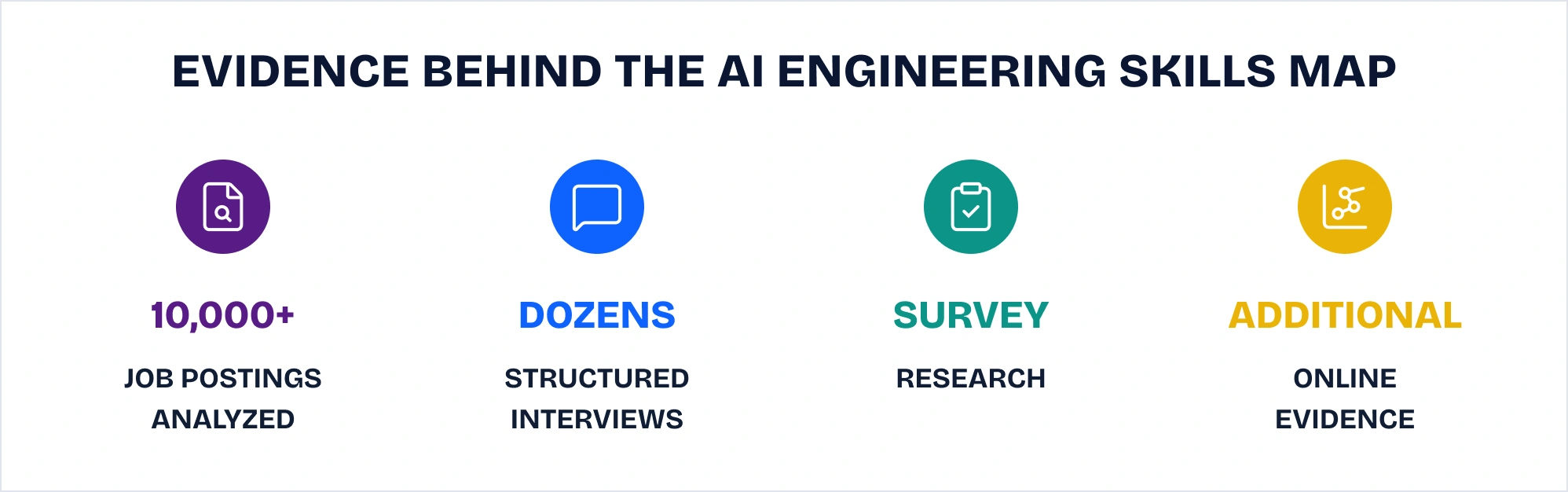
An analysis from Andrew Ng and DeepLearning.AI gives that transition a useful evidence base. Its AI Engineering Skills Map draws on more than 10,000 job postings, dozens of structured interviews with AI experts, hiring managers and recruiters, surveys and additional online evidence.
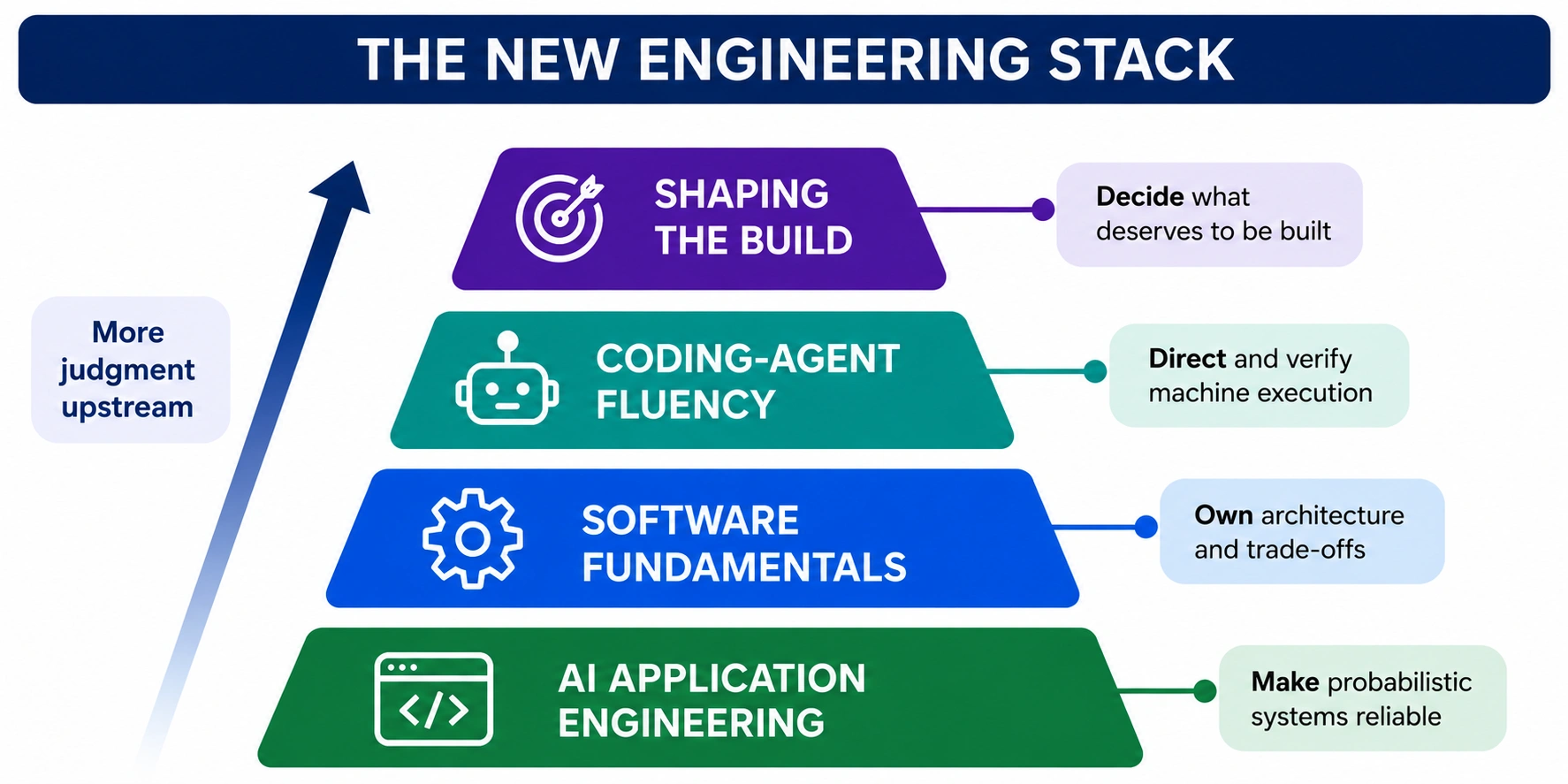
The analysis identifies four capability areas becoming increasingly important across software roles: building production AI applications, software engineering fundamentals, working effectively with coding agents and shaping what gets built.
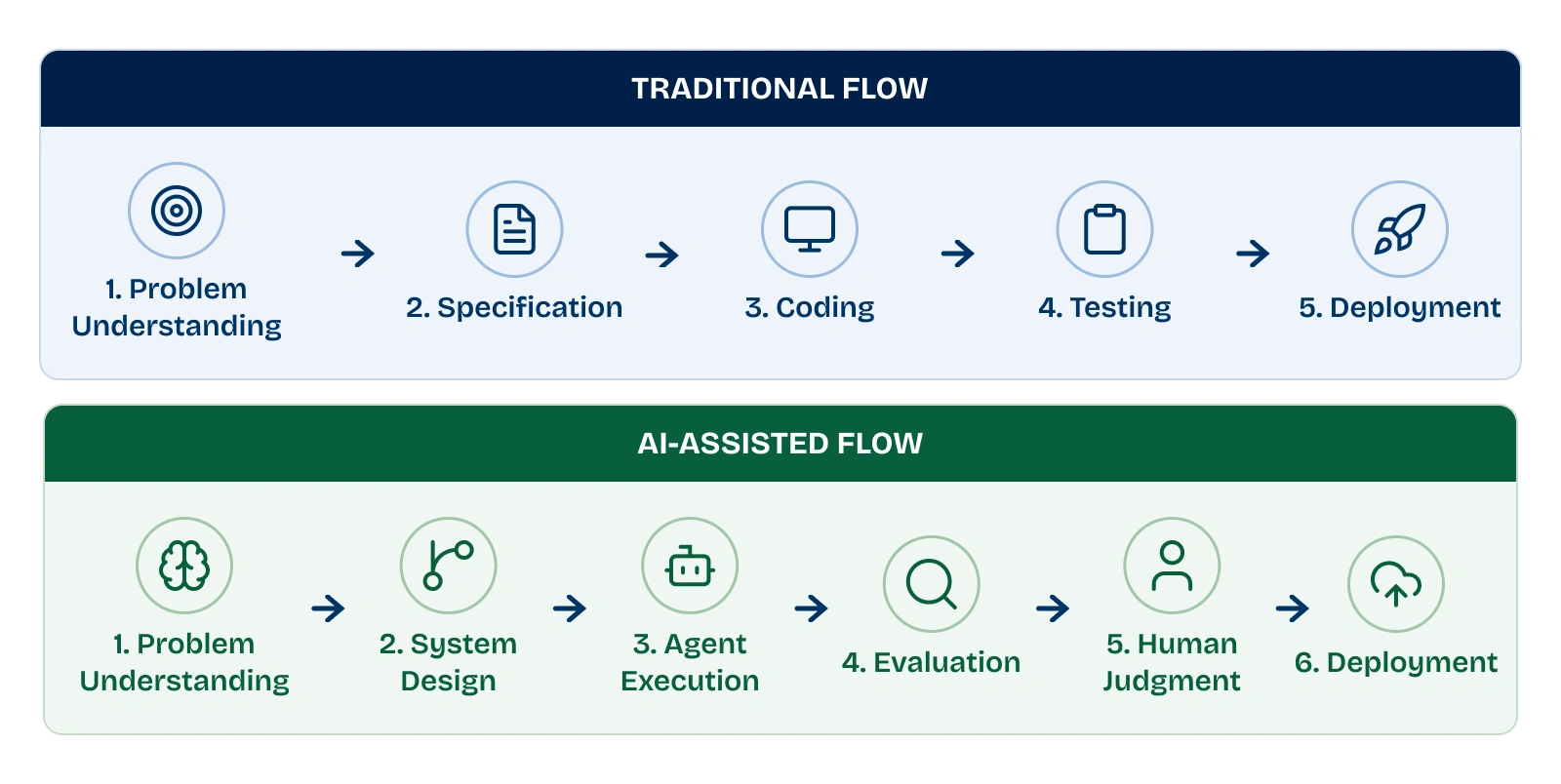
Coding agents can now explore repositories, generate features, write tests, debug failures and revise their own work. That does not make engineers less important. It changes where their leverage sits. When implementation becomes easier to produce, the harder skill is deciding what should be built, what trade-offs are acceptable and whether the result can actually be trusted.
AI has made output easier. Reliability has become harder.
Traditional software is designed around relatively predictable behavior. AI systems introduce another layer of uncertainty because their output can vary with models, prompts, retrieved context and input conditions.
DeepLearning.AI therefore places evaluation and error analysis at the center of AI application engineering. The valuable engineer is not simply the person who can connect an LLM to an application, but the one who can measure failure, understand its cause and steadily make the system more dependable.
For engineering teams, this means AI application development increasingly depends on more than model integration. Evaluation, reliability and understanding where a system fails become part of the engineering discipline itself.
AI Lowers the Cost of Producing Code. It Does Not Lower the Cost of Choosing Badly.
That is why traditional engineering fundamentals survive the AI transition. Architecture, storage, latency, reliability, security, privacy and cost still involve compromises.
Coding agents can implement those decisions quickly, but speed does not make the decisions correct. In fact, the more code an engineer can generate, the larger the consequences of weak technical judgment can become.
DeepLearning.AI argues that understanding these fundamentals also helps developers give agents better context and recognize the trade-offs hidden inside generated solutions.
For CTOs and engineering leaders, that changes the productivity question. The advantage is not simply generating more code, but using AI without weakening architecture, reliability or engineering judgment.
Coding agents turn developers into system directors
Knowing how to use an agent is also becoming different from simply knowing how to prompt one.
Developers need to understand when an agent should plan, when it should execute, what context it needs, how its work will be verified and where human intervention remains necessary. Time, token usage and unnecessary agent loops also become engineering concerns because autonomy without efficient control can simply move waste from human effort into compute.
The most consequential shift happens one step earlier.
As agents improve at executing a well-defined specification, more human value moves into defining that specification.
Engineers increasingly need product understanding, customer context and enough business judgment to distinguish a feature worth building from one that is merely easy to generate. DeepLearning.AI describes this as “shaping the build,” and it may be the clearest sign that software engineering is moving upstream.
That also has implications for hiring. Technical execution remains important, but engineering teams may increasingly value people who can define ambiguous problems, evaluate AI-generated work, understand system trade-offs and connect technical decisions with product outcomes.
The result is not a world with less engineering. It is a world where engineering covers a wider surface.
The future developer may personally write fewer lines of code while becoming responsible for more of the decisions that determine whether the product succeeds.
That is the deeper lesson inside the 10,000-job analysis. AI is making software production faster. The scarce capability is becoming the judgment required to direct that speed somewhere useful.


